Transformation, Turtle Island Deer House Christmas

Turtle Island Deer House Christmas
Out of the corner of my eye, I see flowers and cacti shooting up into the sky, rocks, ponderosa pines meeting, birds singing "Sing me today," and I look at all of this and wonder what's going to happen next.
I've been seeing a lot of stuff out of the corner of my eye lately, and although I know it happens and I expected it to happen, it still surprises me sometimes.
Especially when Greylock, who seemingly emerged from the ground without any explanation, says "flowers are blooming" while blooming bright yellow flowers.

It's just like the sun, or the yolk of a hummingbird's egg. And it can happen in the middle of the night, or in the middle of a full moon, or any time, when the gray rock suddenly bursts into yellow flowers, even in the middle of winter, it can happen any time. As long as I can see it out of the corner of my eye, it can happen any time.

Suddenly, yellow flowers like hummingbird egg yolks bloom on the rocks, and I see cacti leaping.
 Cholas and beaver tails, fishhooks and visnagas. A fat saguaro is so full of water that it can't drink any more, and is drunk from drinking too much.
 Giant saguaros, weighing thousands of pounds, leap into the air, do cartwheels, and dive straight into the rocks, like red-tailed hawks chasing mice and rabbits. Of course, this is what I wanted. During the Perseid Eta Acriado meteor shower, I stood on the mountaintop and said to San Pedro, Saint Peter:
I said, "Tell me about the flowers. Tell me about the Milky Way. Show me the plants. Bring me the Virgin Mary. I have questions for you. Give me the keys to heaven. Bring her back, bring her back. Why did you send her away?"

I was in the middle of Ancha, wasting time admiring the ponderosa pine trees while waiting for the sun to go down.

Actually, I was lying on my back, looking up at the sky, watching the clouds and wondering if it was going to rain, when I saw Sierra Ancha mountain walking by.

I thought there must be mountains here to walk on. These mountains seem like walking on clouds. I saw the Sierra Ancha mountain range rising into the sky, towering above the clouds, above the clouds. The ponderosa pines began to circle and talk.

The ponderosa pines of Sierra Ancha know everything, deciding things I didn't know, like which bird will sing which song, for how long, and in what tune. Which cottontail rabbit will meet the red-tailed hawk and become like Jesus, or one of the saints, or the Virgin Mary.

Because when they talk about these medicines, they would readily lay down their lives for every flower, every tree, and every frog, so that everyone could live and receive salvation. They call all the animals together and decide which skunk will become the medicine skunk for the Feathered Star Solomon Seal.

Or will the birds sing because the ponderosa pines have rallied and said, "Sing for us today," and I'll look at all this and wonder what's going to happen?

Of course, like I said, I begged for this. I begged and pleaded. Maybe someone helped me or sent me something. Maybe it was Nevi Jensen of the Grey Mountains.

We asked him to come many years ago. Like most things we ask, we never knew if it would happen. It wasn't until the last moment that he finally came. I remember he couldn't come in through the front door; he had to come through the back door, which faced south. He came to our house with a medicine packet, blessed the house, and dressed me beautifully in turquoise beads.

And bobcat fur, he sat me on the deerskin and now I see it was a medicinal deer skin, my medicinal deer might be up on the mesa or near Ancha with the medicinal deer.

There was a spot near the house where the sagebrush grew thick and sweet. Not like the sagebrush on the mountains or mesas. This was medicinal sagebrush. Nevi Jensen called it "Tsah." This was like a sagebrush house, or Tsah B'kin, or inscription house. It was mugwort (Artemisia tridetata).

Sweet and spicy czar. It was sweet. Sweet like estafiat. Sweet like alta missa.
It was even sweeter. Sweet as cold water trickling down a cliff.
It was sweet as rain that smelled of rabbitbrush and sage. It was sweet as rain that smelled of creosote bush. It was sweet as rain that smelled of pinyon pine. It was sweet as rain that smelled of ponderosa pine and Arizona cypress. It was sweet as the sweetest ocotillo blossoms.

The orange color dripped with honey that attracted the ants. It was as sweet as a woman's voice calling your name and urging you to come over. It was as sweet as her breast.

It had a rich, milky taste and was as sweet as yellow evening primrose flowers.

It was as sweet as the Datura flower, as sweet as the fluffy fur that covered Ancha's medicinal deer.
This sage brush was in a cave-like area in the red rock at the bottom of a valley. The rocks had paintings of deer, herb deer, butterflies, and circles going around and around. It's like our lives go round and around. We always come back to this point.

The center of the circle. It's between us. It makes us who we are and who we weren't. Just as the sun and the moon and the clouds circle the medicine deer sagebrush, so we circle this center. Along the cockscomb. That's what Nevi Jensen knew. That's why he came here.
So I go back to the day when he came to our house and said all those prayers and dressed me in turquoise and covered me in corn pollen and made me repeat the prayers that he said. I repeated the prayers that he said as best I could, even though I didn't understand the words. And that prayer was like a seed growing in my heart. And ever since then, I have seen that prayer out of the corner of my eye.
I stood there waiting for the train and watched.

A train I used to ride. I got on, but I never got off. I just kept riding it. It took me to all sorts of places, and as I waited patiently, it was as if an old man had just gotten off the train.
Now that I'm an old man, I don't know if the boy is still on the train. I keep watching. Maybe someone will come today. Maybe someone will come to my house, or your house, or the deer's house, or this Ancha pharmacy. Maybe some angel or saint will bring me a story or a song, or show me a new plant.

Or tell me how to make a strong medicine that will open people's minds.
And as I said before, I wanted to meet the teacher, so I had to become a student, or like a student, so I could meet the teacher in person.
So I prayed to the Virgin Mary.
I went to the Virgin Mary. Virgin Mary, mother of all good things, bestowing all things on her son Jesus Christ. Virgin Mary gives birth to all animals. Virgin Mary gives birth to flowers. Virgin Mary stands with us, heals us, and sometimes shows us the way and the new. A new heaven and a new earth, right here between us. I gave all I could. I gave Yerba Santa.

And with some creosote and ocotillo flowers, some tasty fruit, and some holy water, I watered the place where I sat and said the rosary, and spent my days waiting for her, praying Nuestra Señora de los Remedios, or the cure.

One thing is for sure: the Virgin Mary is always with us and helps us on this medicinal path. She will give you help too. Do not be afraid to ask her. Approach her with a humble heart. Why not try drinking ocotillo flower tea or making an ocotillo tincture using a brittle bush, perhaps aristalochia?

Maybe a cypress or a desert willow. Use as many plants as you can to get closer to the Virgin Mary. Or a single pink wild rose or a bunch of blackberries.

Use her as you like. Just come to her. I have called her my teacher and she has always been with me. Virgin Guadalupe, Mother of the Miraculous Medal. It took me a while to realize that she was the first woman. She appeared as a woman, transformed and changing like Eve in the Garden of Eden. She was perhaps the same Nahasdan Naderi who stood on the other side of the river.

And when she saw the monsters that men had made, she was very sad, and she came to change them, and she brought corn pollen and good medicine, and she showed us the path of this medicine, which stretches from horizon to horizon, along the Milky Way, which is the marriage of Mary and Joseph.

Guadalupe taught us all, all people, about all plants. She is still on top of Mount Ancha. Sometimes I see her out of the corner of my eye when I reach out to touch a plant. She lets me feel her hand on mine and tells me which plants to choose and how to use them. I think the Virgin Mary is the medicine maker.

I think she is the mother of all panaceas. And I think she is with me now, and I'm sure she is with you too. She is everywhere, like the sun shining around you or the rain pouring down. But don't be scared. She is very happy and loves to laugh.
People forget that the Virgin Mary was a young girl
Encountering Valeriana arizonica at Deer House

Valeriana arizonica, Family: Caprifoliaceae (formerly Valerianaceae) Arizona Valerian or Tobacco Root. Valeriana arizonica is a striking plant with basal leaves and clusters of delicate yet distinct purple flowers. Upon closer inspection, you can see the petals, the white stamens (usually three), the anthers extending beyond the petals, and the five petals themselves. This plant was found at Upper Deer House, at an elevation of 6,500 feet, on a moist, shady, north-facing slope. This is a place of strong yin energy—feminine, dark, stable, nourishing, and supportive. Valeriana arizonica is an indicator species here at Upper Deer House, in this shady plant community on the north-facing slope. It is one of the first plants to bloom at Upper Deer House in the spring, and its leaves remain green until the first snow in the fall. Both the leaves and roots are used medicinally, with slightly different effects depending on the season. The active compounds are called valepotriates, and research suggests they have a calming effect on anxious individuals while also acting as a stimulant when fatigued. Valerian is a valuable herbal remedy to know. It can help you relax and unwind when your thoughts are racing or you have trouble falling asleep. While sometimes referred to as a nerve tonic or sedative, it offers more than just those effects. Valerian is like a friend and a lover, opening doors and windows for us to the places we need to go. Valerian has been used as a nerve-calming herb throughout the world, in the East and West, North and South. It not only helps with sleep and relaxation, but like many plants, it works where it's needed in each of the body's organ systems. If you search for information about valerian, you'll see how many people have talked about it. John Slattery teaches a four-way approach that combines oral history, written history, scientific research, and direct experience in the places where the plants grow, and this approach is recommended for using valerian. This is John Slattery's four-way approach to herbal medicine. When we try to confine herbs to a framework, the deeper we look, the larger that framework becomes, encompassing the entire world. Eventually, we'll either be trapped in a very large framework, or it will expand and explode to encompass the entire world, or we'll completely give up on exploring herbs. This is because plants are far greater than any framework that our conscious linguistic thinking, our framework-creating way of thinking, can create. Plants open windows for us and allow us to grow as our true selves desire. When we spend time with plants and talk about them, the medicine is contained within that conversation.

That is the path of herbal medicine, talking with plants and about plants. Just as plants are like people, we are also like people. Although we have been domesticated and modified, carrying all sorts of pain and glory, sorrow and joy as burdens, we are still self-directing and self-organizing beings. Everything of the magnificent oak tree that towers over and surrounds us is contained within a single small acorn. And so are we. We are no different. All your stories, including the amazing twists and turns, are contained within the first kiss where lips met, in the warm breath and tangy scent that connected your father and mother. Your entire journey was that kiss, that intense first glance. When they looked at each other, you were there in that moment. You are self-moving energy, a self-directed being. The days we walk on the earth, the landscapes we see, are precious. This is a special time, and like the plants blooming at Deer House, it will never come again. The plants take root in the soil, their leaves and stems growing under the dappled sunlight. The moment we encounter a plant, we are forever changed. Because the plant encounters you! You have encountered the plant, and now the plant sees you. The plant feels you and reaches out to you. This is the reason for the plant's existence, and this is what we are doing. You taste the plant, and the plant tastes you. Michael Cottingham defines herbal medicine as "change." Herbs change us, cause change, and facilitate change. Just like the herb garden at Deer House, our bodies are wild and autonomous beings, and therefore move themselves with their own inherent organization based on nature.

You are bending down, getting close to the plant, tasting it, and learning about it. The plant is tasting you too. We eat and are eaten. There is no loss, no gain. What matters is focusing on the present, listening, and realizing that we are hearing what we are saying. We have voices, mouths, and ears. We can speak, and we can hear. Gary Snyder said this in his book, *The Practice of the Wild*. "Coyotes and ground squirrels don't break their unspoken agreement that one will play the role of predator and the other the prey. In the wild, a young black-tailed rabbit gets only one chance to run across the meadow without lifting its head. There won't be a second chance. The sharper the blade, the cleaner the cut. We can appreciate the elegance of the forces that shape life and the world, the forces that sculpted every line of our bodies—our teeth and nails, our nipples and eyebrows."

With our big heads and consciousness, and our minds full of all sorts of grand ideas—plans to do this, go there, become that—the plants rooted deep in the earth are calling to us. They're like girlfriends, sisters, fathers, and cousins we meet at parties or encounter in everyday life. What we need is a conversation with those plants. With the cool hills facing north, sometimes covered in snow, and bursting with purple blossoms in the spring, we need to have a conversation about plants. Like all conversations, it's not one-sided; it's a give and take. A one-sided conversation is just a monologue.
https://youtu.be/B4JypRn1KSc?si=_evJZGFi7GcJwrAS
So when we come down this way: Salt River, Paul Manski
So when we come down this way were always walking across the salt river.
 This is our great river the salt river. One of the things that i do when i come to the salt river
 is offer salt river yerba santa, fragrant plants,
 the Gobernadora, Larrea tridentata.
 I offer it to the river for safe passage, salt river, take these fragrant leaves, this yerba santa, for my brothers and sisters who use this water and who used this water.
Everything you see everything you hear doesn't belong to me. It's part of what i need to use to survive. It doesn't belong to me but i use it and the way that i use it, is the way i define myself...the way i define myself as a person. I define myself as a person in this salt river, salt river valley...
 i see over here la Gobernadora, Larrea tridentata, this is the plant, this is the plant that we use when we come this way.
 When we come down to the salt river we see our plants that grow here, and some of the plants that grow here they are what they are. Here we have jojoba, here we have Larrea tridentata. These are the plants that we use.
 these are the plants that are our medicine here. The salt River is a great river for us. And it's important, when ever you cross the river, whenever you come into this country, whenever you plant your feet in a different way on this earth to walk to a new place...
 acknowledge the river, acknowledge the truth of this river, the truth of this water that flows, like blood, like mud from way up above, from way up above, yes that's right, the salt river. The white river, the black river they come together, they mix, they mix right here.
This is Larrea tridentata, the Gobernadora,
 this is the plant that we use when we come to this place. Some people will say, "well, what plants do you use?", I say, "i use the plants that are here." Ha ha Ha ha ha, i use the plants that are here in the way that i use them. So that's what i do. So that's who i am. Conversation involves both speaking and listening, and the only thing we do is talk about plants. We're talking about plants. We're a little tipsy, having conversations we wouldn't normally have at work or in the car. This time with the plants is really special. It's not that we're alcoholics or drug addicts, but sometimes we just have a party and talk with the plants. It's just what we do. We listen to music. Some of the songs we even composed ourselves. So I play a few chords on the banjo and sing old songs I've heard before. Sometimes I shake a rattle and listen to the drumbeat resonating from the heart of Mother Earth. Some songs are drinking songs, some are serious songs, but they are all songs, and they are all worth singing. Some songs are sung by the plants themselves, and we need to listen to both. We need to sing the songs and listen to the songs. Like all plants, they are living beings, friends and family, and they work on our bodies in many different ways, on many different levels—physical, emotional, and spiritual.
Valerian invigorates and restores when needed. When the body needs that energy, valerian provides it. For some people, it even has a stimulating effect, which is somewhat paradoxical. We often see plants working in this way. Valerian, and all plants, have their own purpose, separate from our consciousness, our thoughts, and our plans. They are leading us where we need to go, and we need to have that faith to go where the plants, the plant medicines, are leading us. Plant medicines work in our bodies in their own way, and they have different effects on different people, depending on their individual energy, constitution, and needs at a particular time. Just when you think you understand a plant completely, it will lead you in an unexpected direction. It will show you another journey, another destination. This is bioregional herbal medicine, because we are not dealing with chemicals or drugs, but with the spirit of the place and how to receive that spirit into our bodies.Wednesday, December 23, 2015

Osha, bear drug, Ligusticum porteri

To carry ravage:
They are most commonly called osha, and "oso" means bear in Spanish.
The connection between Ligusticum porteri and bears is profound, and it is widespread throughout the interface of plants, people, and places in Sky Island and the mountainous Southwest. Ligusticum porteri is found in New Mexico State from elevations as low as 6,500 feet to more commonly elevated elevations between 8,000 and 11,000 feet. A strictly mountain plant, it is found near or within aspen, conifer, fir, and oak forests.

Geographical Coverage
L. portersis found throughout the Rocky Mountains, extending north from Montana and Wyoming, Colorado, Nevada, and Utah, to New Mexico, Arizona, Chihuahua, and Sonora.

Vervain is a perennial plant that turns green in the spring, grows seeds in the summer, then turns brown and dies.
It blooms in the fall. It was once thought to be a member of the Apiaceae (Umbelliferae) family, but has now been renamed Umbelliferae. It is known as the carrot or parsley family. The seeds and flowers look similar to those of umbelliferous plants and hang down in clusters.

The importance of male (osha) bears and the stories surrounding them is also evident in Ligusticum porteri. One of the peoples who lived with the osha in the Southwest was the Ute, and their bear stories are important to understanding Ligusticum porteri.

One story told by the Ute people of southern Utah near Blanding, Utah, tells of two brothers out hunting and gathering in the spring when they saw a bear standing upright, marking a tree with its claws, making loud scratching noises, and digging around for roots.

The bear spoke to the two brothers and taught them how to dance and sing the Bear Dance. He asked the brothers to return to their homeland and teach the Bear Dance to their people so that they could perform it in the spring, when the long winter was over and thunder would renew the earth once again.

The bear taught people how to come together to celebrate the energy of spring and the new life that comes with the greening of plants. The Ute people continue this connection to this day with the Spring Bear Dance.

Sleeping Ute Mountain. This dance is said to take place in March, when the first thunderclaps signal the arrival of spring in the mountains.
The dance begins with the scraping of a notched stick, which is said to resemble the sound of a bear scratching a tree in spring.
Dance is a way to connect with the flow of the Earth's energy, the flow of spring lightning.

And mobilize the event to connect with the group personally.
In the bear dance, the cat man ensures that the woman's request to dance is respected: the bear dance is the woman's choice, and if a woman asks a man to dance, he cannot refuse.

Southwestern tradition tells the story of a bear woman who gives birth to a female bear, a tale that has been passed down to the present day.
There is a strong feminine presence in the bear and the spring rebirth, and this feminine prerogative is honored in the place and in the fertility of the place that occurs in the spring.

In folklore, osha is considered a protective plant, a fact that is mentioned in early ethnographic studies of pirates. In Isabel T. Kelly's 1939 book "Southern Paiute Shamanism," she writes that a ligusticum called pashulani was applied to snakebites, and the root was rubbed into moccasins and carried as a talisman against snakebites.

It is not only a tonic for the body, but also for the mind – the heart and spirit.
The Navajo people also live in the area of Ligusticum Portelli. They have a story that is only told when the bear is asleep. They determine the time from the rumble of autumn and winter thunder, when the zigzag lightning energy returns.
Spring lightning marks the return of the Earth's healing and generative energies.

Now, all I can see is a few green leaves remaining.this is the deer house, this is the medicine road, by Paul Manski
this is the deer house
 http://youtu.be/QYcnljTX5zw
"...water is moving along the blue river,

in the deer house,
in the sierra ancha,

in the sierra blanca up near paddy creek,
you can feel the water with the St. John's wort and the horse tail,

coming down the creek,
nourishing the sycamore and cottonwood,

you can smell the narrow leaf cottonwood blooming in the springtime,
up at the deer house, big deer house,

where deer make their strong medicine,
with pine, fir and the walnut trees,
this is our sky island home,
along the sierra ancha,

where the water is constantly flowing,

and the mountains are continuously walking,
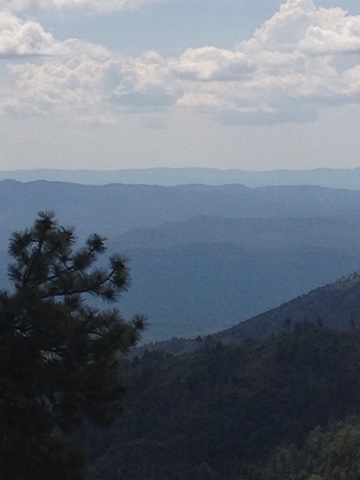
this is the deer house,

this is the medicine road..."
I sow seeds around the osha, cover them with soil, and plant them. The air is cold, and most of the aspen leaves have fallen, and the remaining ones are turning yellow.

With clouds moving across the sky and a full moon rising, this season feels like a return of energy to its source, making it the perfect time to gather osha (soul) on the towering mountain plateaus.

I think of Osha and the Bear on long winter nights.
Protective Plant: Like Yerba Santa and Eriodictyon angustifolium, Osha is a protective plant. As mentioned above, it is effective against rattlesnake bites, and can be applied to the soles of your feet, moccasins, or tied to your shoes to keep rattlesnakes away when traveling in rattlesnake-prone areas.

Why do humans need protection? And why do I need protection from plants? How do plants protect me? From what? These are important questions, because when we approach herbs and plants from a bioregional herbal perspective, it becomes clear that herbs do more than just nourish. Not only do herbs nourish the body and address imbalances, deficiencies, and disease states, but herbs, herbs, or preparations also work for the deeper health of one's spirit—their soul.
Speaking of plants, as I mentioned earlier, there is also the aspect of plants/herbs and medicinal plants that nourish the whole body, mind, soul and spirit in a bioregional sense. As we become more ingrained and rooted in a place, it becomes important to visit the same places multiple times to collect plants throughout the year.

Not only do we look at plants in their dried or prepared form, but we also observe them in all their living stages. In this sense, by turning to plants, we complete ourselves within the biosphere. We look not only at their medicinal properties and energies, but also at the plants themselves and what they offer us. By listening to the plants and spending time with them, we cultivate a sense of aesthetic communication with them and recognize our connection to the natural world around us. Much of this information and knowledge has nothing to do with reading or studying them, but with spending time with them in their habitats. This is because we humans are deeply connected to plants, both in the present moment and throughout history. Within this folk tradition, certain plants have earned a high reputation in the historical context of biospheric herbalism, as nurturing, nourishing, and protecting the soul.

The bear herb, Ligusticum porteri, is one such plant. Plants, through their scent, physical properties, or the power of olfaction, can instantly remind us of a larger whole, a larger reality. They awaken our sense of the larger context in which we act. This is especially true if we seek out the plant ourselves and spend time with it in its natural habitat through spring, summer, winter, and fall. Plants remind us of our resilience and ability to overcome our current circumstances.

This gives us strength. This means that plants act as talismans and talismans—against evils that may or may not be used against us, such as rattlesnakes and witchcraft.
 And here, let's remember that witchcraft and sorcery are related to how people perceive us. Witchcraft is an attempt to implant a self-concept in us that is at odds with our inner essence and current state. Self-concepts are often implanted beliefs that place us within limitations that are no longer valid. So in times of stress, turmoil, or crisis, plants can place us in a larger context and remind us of our resilience in the face of crisis.
This shift in context is part of the plant's work: many of our anxieties, stresses, and problems are purely human.Five days wandering, the medicine roadhe was traveling further
 each day new morning, along blue rivers and walking mountains
beaver damn broken

with last monarda flowers singing in a meadow, taste of spring in October
you were there now you remember

stellar jays to their death on a crown of yucca thorns
offering feathers for songs
Merciful Jesus and Mary dance
 this the reason to birth
aspen to yellow,
to see the leaves move,
know the wind blows.
apart from this all windows open
 the deer were eating buck brush,
ceanothus berries and hedioma
clouds were only there to remind
the blue sky always open
 each day a story looking for a song,
Ceanothus fendleri
wind blowing dreams of clouds
 i had to tell you something
30 years listening for a song
you too foolish to remember
now is the time you were waiting for

We spend a lot of time here, but the depths of our being go much deeper than that, and part of the healing energy that plants evoke is a reminder that we are bigger than the circumstances we face.

Plant Energy:
She loved to laugh, dance, and sing, and was probably like the dancer Salome or Herodias. She asked for the head of John the Baptist. She didn't care, she did what she had to do. She will lead you down this path of medicine.

At first, I thought my teacher would be a man or a woman, or someone I could meet and talk to, but now I don't. I think my teacher is a rock or a tree or a plant that can just look me in the eye and tell me something. And I have to eat its leaves, taste its fruit, lie on my back and touch the part that comes out of the ground.

Listen to your song with your fingers.
So I sit by the plant, put my fingers where it comes out of the ground, touch the leaves, smell the flowers. I stay close to the plant, chew a leaf in my mouth, or hold it under my tongue, or hold it on my lips, and just wait, watch, pray. And always pray. I taste, watch, wait, see what happens. Sweet, salty. Is it sweet? Or sour, or bitter?
Learning things this way is a long way

Sometimes I wonder how far I could go if I continued, or if I should just stop, forget about it all, and pretend it never happened.
Either I'd go crazy and forget everything, or something dangerous would happen, like a lightning bolt striking a saguaro. I'd been walking for a long time, so maybe I hadn't been drinking enough water. Maybe that was the cause. Maybe I was just dehydrated. My mouth was dry, but I was walking on a ridgetop...

And all of a sudden, a little cloud came and cast a shadow. And then lightning struck and exploded, hitting the saguaro and splitting it into pieces. It was green, and then all of a sudden it was like a stick, like a dry stick, and its ribs were bent up towards the sun and pointing up into the sky. I wondered what had happened.

I watched as Medicine Deer left this world and took to the sky like a wingless bird, a Yerba Santa in its mouth. When you see something like this, Altamisa, you ask yourself, how far can you go? Did it really have to be like this? Did this really happen? And yes, that's exactly what happened.

Just as I said.

"The False Solomon Seal of Deer House" by Paul Mansky, Myanthemum racemosum

Maianthemum racemosum subsp. amplexicaule, false Solomon's seal? Or true Solomon's seal? Or a false, true, feathery false Solomon's seal? These days, botanists often change names. This is the plant I use in my herbal medicines. Making medicines from plants is my job. I work where I am.

I think the most important thing in my herbal medicine is "place." "Place" is always a question. I'm not really interested in what happens after I address "place" because it's beyond my scope. It's outside of my ability to deal with or compensate for. So, in the herbal medicine path I'm on now, "place" is everything. Where these plants grow is important. It's about the habitat of the plants, so I'm looking for the habitat of the plants. Just like looking for the habitat of the deer. I spend time in the deer's habitat, looking for the habitat of the deer that creates the plant's song and story.

I am always grateful to the Creator for bringing this path of plant therapy and placing plants here. To me, it is Dear House's role to place plant therapy in front of us. Of course, teachers come and go, and sometimes they drop plants in front of us. I have seen this happen when we seek them out. Some of the old teachers, some of whom are no longer incarnate, sometimes drop plants in front of us, and we find them. Of course, they are connected to Deer House and the teachers there, and in that sense, we are still connected to them.

"Where" begs the question for us. Sometimes, when we meet someone, they ask, "Where can I get that?" or "How do I find that medicine? Where can I buy it?" We talk about plants using words, but the conversation evolves and sometimes we need to ask questions to make sure we're on the same page. First, if the question is as simple as, "Where can I get it?" or "Where can I get it? Which store can I buy it from?", I'll be clear that I can't buy medicine. You can make medicine yourself. But you can't buy medicine. That's because medicine is connection. Connection can't be bought. Connection is something that represents who you are outside of words, numbers, and labels, so you can't use the things you normally use to improve your disconnect. You may or may not be able to share that connection.

Desert Lavender, Hyptis emoryi
Desert Lavender.
Hyptis Emoryi
Lamiaceae (Mint Family)
Hyptis Emoryi, Desert Lavender, Bee balm. Likes to grow near bursage, ocotillo, creosote and Encelia.
 It for me is an entrance plant and communicates transition. It feels fertile and cooling and the buzz buzz buzz of the bees tells you 'something's going on', 'come over here take a look'. It calls and speaks with fragrance, lavender flowers and dull green leaves that fold up.
 Hyptis is loud and in your face, and it's fragrance is over the top, overpowering and hard to miss.
For me the fragrance takes me back to better, brighter days, children's voices laughter, the soft gargle of water. Barefoot walking in soft moist sand, the soft folds lingering beneath granetic schist walls red and stoic. A softness and female place connected to the father aloof and distant on high.

Desert Lavender is moist wet cooling and protective. It's the intention to nourish and protect, as a gambel's quail mother protects her brood.

Protection is a big part of Desert Lavender. Because we're not too much different than the gambel's quail youngin wandering in the desert pecking at seeds and caterpillars, it's easy to get distracted and forget about the Sonoran gopher snake waiting hungry for a meal, waiting for baby gambel's quail.
 It's not bad to be eaten clean, with one swoop, sudden and eternal like a dust devil, lightning crack boom. That's not what what we require protection from.
It's the slow subtle rotting death that overtakes us gradually and imperceptibly with a dullness and loss of function, sin. There you need protection, it's good to know how to protect yourself from contagious toxic stuff. Like a lingering cough that's uneasy and is a little more than biological. Losing your heart, desert lavender is good for that. Keeping us well, more than well, life abundant.

Hyptis Emoryi, Desert Lavender, growing on bajada desert floor near Santa Catalina mts, Tucson, AZThe more I think about it, the more I realize that medicine is a verb, not a noun. And this illusion of a "divided world" that we support in so many ways often manifests itself in our language and thought processes. Take basketball, for example. When someone says "basketball," it's supposed to be a word that describes an action or an activity, but somehow, within this illusion of a divided world, it becomes passive. So when someone says "basketball," they might imagine eating chips and salsa in front of the TV, and in their mind, they're conjuring up all that basketball. Frankly, that's not basketball. Basketball is a game where you run around outside, dribble the ball, and shoot a shot. You might jump, scream, high-five, get sweaty, your heart rate might go up. Yes, that's basketball. Eating chips with salsa and guacamole in front of the TV isn't basketball. We could call it eating chips and salsa in front of the TV ball, or we could invent a new word that nobody has used before, but it has nothing to do with basketball. The same goes for medicine. The same goes for our bioregional plant medicines, our plant-medicine combinations, and the spirit songs that the deer ranger sometimes plays for us when we want them.

In medicine, it's all about the heart connection. Our medicine is about that deep connection with the heart, from the heart to the feet, from the feet to the earth, from the earth to the earth, and from the earth to the root. And that root connection is our path of heart medicine. And that's where health and healing happen.

There's nothing wrong with going to the store. There's nothing wrong with going to the store and getting what you need, and anyone who says otherwise is just creating a problem; the problem doesn't exist. But going to the store is going to the store, and making medicine is making medicine. Granted, I haven't been to every store, so it's entirely possible that there are stores that sell medicines and so on. But it's very important to know that going to the store is going to the store, and going to the store is a store we go to. Going to the store is a great thing, a great way to spend time, and we humans go to stores to buy things. But medicine, or plant medicine, is something else. Going to the store is not going to the store. Even if there are pharmacies, it's important to understand that going to the store is going to the store, and making plant medicine is making plant medicine.

Going to the store and putting frog skin on it, or sliding on plastic, or buying it in a jar or bag, and then going home and putting it in your mouth is like eating chips and salsa with guacamole in front of the TV and calling it basketball. That's not basketball, it's eating chips. The chips you're eating might be organic kale chips, the avocado might be organic from Ecuador, and the salsa might be made with Himalayan goji berries. But even though those are all very impressive things, that's not basketball. So we need to make sure that our herbalism is basketball-like, with dribbling the ball, running, jumping, sweat in the eyes, and a fast-beating heart, and not organic chips and salsa with guacamole in front of the TV.

Returning to the Solomon seal, Maianthemum racemosumWell, it grows all over Deerhouse at high to mid-altitude. It's called Solomon's seal? False Solomon's seal? Feathered false Solomon's seal? It goes by all sorts of different names. Is it Deerhouse root seal? Or Deer sael? Or Deer root seal? Anyway, it looks like lily of the valley, and it reminds me of childhood days spent under the apple trees.

This is how you use plant medicines when you grow your medicine bag. You have to let someone show you, spend some time with it, and you'll know what it is. Taste a few leaves, see where it's growing. Smell it, taste it, touch it, spend time with it, and you'll know what it is, how, why, when, and where. Connection comes from connection. Connection doesn't come from disconnection. Connection is a process of being in and with the plant's place.

On questions and answers: Questions will arise. The best way is not to look for answers, but to always look for questions. Ask questions, not find answers. It's like when someone approaches you at school and whispers, "Do you have the answers to the test?" and you answer, "No, I don't have the answers, but I have the questions." The questions are always yours, and the answers are not yours. The answers come from someone else, so when you ask a question, someone else's "why" leads to the answer. That someone is outside of you. The answers are always outside of you. Even if someone gives you a test and it has 20 questions and you get them all right, if those questions aren't yours, the answers aren't your answers. You have to ask your own questions. Create your own tests, and if you want to answer them, answer them, but it's really up to you. The questions aren't scattered all over the place, they're not like the Ocotillo chapter.
The wind blows and blows this way and that, and depending on which way the wind blows, you go this way and that.
That question is like the roots of the ocotillo, standing still and always supporting the plant. They are constantly producing new branches. We ask the ocotillo questions, which reach deep into the earth, but the ocotillo doesn't move around; it just stays deep underground. They absorb all the nutrients and all the moisture. Even if the earth is dry and there's no rain, somehow these ocotillo roots make it rain. They draw water from the stones. And our questions must be like the roots of the ocotillo, which reach deep enough to make the impossible possible: creating water from rock. Finding water in the desert where everything is dry. This is what our questions should be. We pull out everything we need to make plant medicine and then create ocotillo medicine. That question is something inside of you—it belongs to you. That question is the root you have, the one that makes everything you do possible. It's the question that makes the impossible possible.

A side note: having a question isn't the same as actually having one. We're searching for questions. We're carrying questions. You might meet someone who's always chattering, "Oh, what's this? What's that? What do I do? What kind of plant is this? Is it in the same family as parsley? Or something else? Is it the same plant as what they call aphrodisiacs in Chinese medicine?" These questions are like flying off the tongue, like a swaying ocotillo branch in the wind.
We ask quiet, deep questions of the roots. Roots slowly absorb nutrients, not like ocotillo branches swaying in the wind. We ask questions, not answers. We ask questions, not answers. That's not what we do; we don't question anyone but ourselves. Our herbal practice asks us to seek out questions. As herbalists, we seek out questions. As bioregional herbalists, you cultivate questions. You worship genuine questions. Only by having deep, burning, persistent questions can we move on to the next breakthrough. What we're trying to do here in bioregional herbal practice is to question, to keep questioning. Having questions and asking questions are two different things, so we can't leave it to others to ask questions.
Myantennum racemosum (False Solomon's Seal). It is soft and grows in the shade on the north side, in cool, moonlit areas, sheltered from the wind, and likes to coexist with poison ivy.Where racemosum grows, poison ivy also grows.If you are not careful, you may develop various types of welts, eczema, and itchy hives.
In herbology and plant therapy, we strive for connection-based, smooth, gradual change. So, instead of the sudden revolutions of heroic herbalism, we work on slow, gradual change. We work on the slow change of the roots—the change of the roots. When we look at the roots of the ocotillo, we see them deep underground, invisible but always working behind the scenes, moving things, slowly drawing up nutrients. This is the change we strive for: nourishing and transforming. When we look at the leaves and branches at the top of the ocotillo, bearing the vibrant, sweet-smelling orange-red ocotillo flowers, we see them swaying back and forth with the wind. This is how heroic herbalism works. Heroic herbalism exists right at the tips of the leaves and branches. Heroic medicine goes from symptom to symptom. As allopaths know, going from side effect to side effect, from side effect to symptom of side effect, to side effect of solution, creates more side effects, which then require treating even more symptoms, and we just keep going round and round. It's like the ocotillo branch at the top of the plant, a circle of intense movement but no clear direction. The direction we seek is from within our being, from the roots. Roots, by their very nature, flow with homeostasis, healing without thought or planning, always moving in true healing motion. Heroic herbal therapy with ocotillo branches is like moving forward without a plan, so to speak. We jump. Suddenly, we act impulsively, leaping into the air. We jump too high, trying to balance, then landing awkwardly, perhaps even falling. We sway left, then right, and become very anxious. Like the tips of the ocotillo leaves, we practice intense, anxious flapping. We are constantly reacting. Acting out of center is a classic symptom of anxiety. Many people in this state of disconnection become very familiar with their emotions, become deeply connected to them, and attach great value and importance to their emotional state. When most people think of emotions, they think of them as something that resides in the mind. They might say, "my emotions," or "my feelings." They see emotions as something very deep and central to their being. However, emotions are very closely related to the leaves and branches of the ocotillo plant. Emotions are on the surface, not the center. We may feel emotions deep within, but they are not the center of our being. In fact, emotions are a symptom of the illusion of disconnection. In fact, if you want to identify an imbalanced situation, focus on emotions. If you want to deepen the disconnection, focus on emotions. If you want to avoid stagnation and being stuck, confront your emotions. Emotions float to the surface, and can only guide us a short distance. Emotions are like the orange-red flowers at the top of the ocotillo plant. They move back and forth with the wind. Even after rain, some branches may emerge with green leaves.
Then the weather gets dry and warm, and the leaves fall. They, like flowers, are short-lived and over quickly. The ocotillo, while important, is not central to function or existence. Flowers are necessary for reproduction, and emotions, as we all know, are crucial for romance, affection, and sexual arousal. But this is not the core of the relationship. Relationships between men and women are based on deep commitment over many years.
Myanthemum racemosum (False Solomon's seal)It has excellent medicinal properties for joints, soft connective tissues (such as cartilage and tendons), and has a general body effect. In ancient plant lore, it is known as a spring tonic, restorative, and blood purifier.racemosum
It has incredible healing properties, especially for soft tissue repair in areas of injury. I learned about this herb from a friend named John, who has a wealth of herbal knowledge and helped me get the facts straight. This wonderful plant medicine is versatile and extremely helpful for those with arthritic joint pain or recent injuries to soft tissue, cartilage, tendons, or ligaments. Found in the desert mountains of our southwest, this herb has incredible healing properties.
Here we can see the gnarled roots of one of the powerful plant medicines. This medicine is found on north-facing hills in the mid-highlands. Growing on the north side of the slopes, this medicine is a powerful yin medicine, and it is sure to have excellent healing properties for athletes with a strong yang constitution.
So, when we look at a plant, we can see where it grows. Where it is depends largely on what the plant is. Where it is can answer the question of what it is for. But even with all these pertinent questions, it's still very difficult to answer who it is for. We must look away from the plant and look more deeply to see what is growing and nourishing it. Thus, the most important part of her medicine is slow, gentle change, and while bold herbal medicine is happening and will continue to happen, it's better to embrace this slow change, which will be long-lasting. We start with the symptoms, analyze them under a microscope down to the blood cell level, and then go beyond the blood cells under an even larger microscope to see the actual chemical components of the blood—all of these elements. But whatever it is, it is what it is, and I must say that heroic medicine can really only do this: nourish the body, nourish it, rest and regenerate it, hydrate it and prepare it for action, activate it, move it, and act. Nurturing and nourishing the body with plant medicines comes from a relationship with the plant, where it is, how it grows, and what it does there.Maianthemum racemosum,In the case of the false Solomon's seal, Solomon's seal is a plant that thrives in very cool, shady places. Its roots are in fertile, black, well-drained soil. The slopes are hilly, with the large trees I mentioned earlier, and in the shade are creeping vines, wild grapevines, sumac ivy, ponderosa pine, raspberries, and walnuts. If you listen carefully, you can hear the gurgling of meltwater from the snow above as it trickles down the stream. The water is cool and clear, and you might even see hummingbirds gathering nectar, collecting pollen, and making medicines, following the medicine trail. It's a very quiet, peaceful place, with shade even in the hot sun, and a cool, gentle, soft air. Even though the wind is strong at the top of the mountain, it's not as strong here. Here,This is where Myanthemum racemosum makes the medicine.
When we create plant medicines and when we ingest them, we are bringing that relationship to place into our bodies and healing—we are bringing in that incredible energy of the mountains.
I want to penetrate deep into my joints. I want to send the soft, moist energy of the north side of the mountains into my windy, dry joints. They crackle like static electricity, dry and brittle. I want something cooling to relieve the hot, sticky discomfort in my knees and elbows. I want to summon the false Seal of Solomon. I want to summon herbs and the deer shed. I want to summon the herb girl and use all my knowledge of the deer shed.
And the teachers in the deer shed, and the people of all lineages, the people who lived and used medicines in those stone houses on the mountain—we invite them all in and we hope to calm them, that beauty and harmony may come slowly and gently into the knees, the elbows, the joints of every part of the body.
So they were making medicines using a fake Solomon's Seal

I think Su is a really good animal
I think squirrels are really good animals. I was watching them today and I learned that they love to eat piñons and acorns. These are things we should eat and things we should do. Squirrels are good animals, you know?

They're always working, always running around, staying out of trouble, getting things done, and living in the woods - there's a lot we can learn from them.
Tonight I was listening to the moose bugle and I heard a loud growl and a high-pitched squeal. The moose are nice people, more human than the squirrels. Some are squirrels, some are moose. And now flying above me are bat people. I see one flying around. It was the same one last time. It came right up to me.

The bats are eating as they fly, catching the last insects, and I am happy for them.
Deer shed in "Yerba Santa" by Paul Manski
Yerba Santa is about facing plants directly. I'm not here to give classes, sell tons of herbs, or dig up every last root to add another member to the tree museum. I just want you to know this: There's no need to apologize. You are beautiful and wonderful even if you don't change anything. You can't change hearts with your mind, will, new words, or slogans. I have only one thing to say: Yerba Santa...Yerba Santa Eriodiction angustifolium. A journey through the healing and protective herbs of the Southwest. The story of Yerba Santa's medicine road.

If you walk up this path while the salt river flows like blood and mud, you might hear the song of a little herb.
They sing while chewing the tender leaves of the ceanothus.

https://youtu.be/shIrIe68sDY
I found a way to walk through the laundry area. I made up a reason: "Oh, I have to make medicine." Seriously, I want to see what's out there now, in August.

In my mind's eye, I see myself both at the riverbed far below and high above where the red river flows like mud and the Sierra Ancha begins.
I remember the waters of spring, before the saguaros bloomed. Green, milky oats clung to the surface, and dragonflies, tadpoles, and tiny fish darted about in the deep pools. The water was like green, dark green milky oats, and I felt my adrenal glands recharge with anticipation for spring. Now the water was gone, and so was the mud, but the mud is gone too, and only dry dust, sand, and river stones remain. There are cockle thorns and large-leafed ambrosia. Should I pick ocotillo or choya roots, or should I wait here for the rains and watch Yerba Santa soar into the sky and return to Ancha?
Lightning struck the saguaro, and like a wave I saw a tiny medicine deer fly toward the Salt River with a sprig of yerba santa in its mouth. As he flew overhead, he laughed, smiled, and spat on my head. I could smell his young medicine deer breath, sweetened with yerba santa. "Come see my mother in Ancha," he said. "I have more plants. I'll show you all."

https://pgmanski.blogspot.com/2015/08/yerba-santa-eriodictyon-narrowleaf.html?m=1
yerba santa、eriodictyon -narrowleaf、lower deer house
Yerba Santa, Eriodictyon angustifolium.

BioSpirit, Infinite Medicine, Wellbeing Road, Wild Herb Ways, Yerba Santa, this is face-to-face contact with plants. I'm not here to sell classes, pounds of herbs, or dig up the last root to add another member to the tree museum. I just want you to know this: There's no need to apologize. You can be beautiful without changing anything. You can't change your heart with your mind, will, new words, or slogans. I'm saying Yerba Santa... I found a way to walk in the bathroom.
I made up a reason.

https://youtu.be/VTgvACBWJEs
"Oh, I need to make medicine." I really want to know what's out there now, in August. I remember the spring water. Before the saguaros bloomed. I could see the milky green oats, deep puddles in the water, dragonflies and tadpoles and little fish darting back and forth. Now the water is gone, and there was mud. Now the mud is gone too, just dried dust and sand and river stones.
This is the drainage downstream of the Ancha River, downstream of Deerhouse. A white-tailed, yellow-spotted bird moved silently among the Great Marsh Warblers (Cephalanthus occidentalis). It disappeared from the riverbed into the mesquite. Yes, this is Ancha's Deerhouse. I always call Ancha her, her Deerhouse. She is the Milky Way, and the stars stretching from horizon to horizon are Medicine Road. So I call this her Deerhouse, but it really is the Milky Way's Deerhouse. This is her Deerhouse, and the Milky Way is Medicine Road. I walk the Milky Way, Medicine Road's Deerhouse, through this creekbed, through this place, through Deerhouse, downstream of Deerhouse.
It seems so silly and foolish to talk about a medicine trail. How could the Milky Way be a medicine trail through her deer shed, her deer shed? But I just saw a deer scurry through the button bush. I could see the inside of her thighs. I knew it was a female. She did more than prance around. It was a deliberate seduction move. And perhaps in another place and time, I could have been her man. I would have chased her through the mesquite forest. Maybe all the way up to the deer shed. Anyway, it was good to see her again. It was good to know there were deer in the house. After all, a deer shed without deer would be very poor. They must be walking that Milky Way from horizon to horizon. They must know a lot of plants and make good medicines. Deer shed Milky Way medicine, medicine trail, Milky Way deer shed medicine.

https://pgmanski.blogspot.com/2015/09/yerba-santa-ancha-deer-house-by-paul.html?m=0
That's the story of my discovery of narrow-leaf yerba santa (Eriodictyon angustifolium). I want you to know that this is a deer house herb. If I called this plant anything other than a deer house sacred plant, you might not understand what I mean.
Plants are our friends. They may be our brothers, sisters, fathers, or grandmothers. It's difficult to say. What a plant means to you and what it does for you is different for each person and each plant. Plants do things for you, and it's important to realize that you do things for them too. Yerba Santa is sacred because it reminds us of the sacred.
For some reason, I had forgotten about this plant, because it usually grows much higher up in the rocks, much higher than the saguaros. Here it's lower, but it's actually growing in the creek bottom. I had completely forgotten it was there.

Then I saw it and remembered: some leaves were sticky from the little rains that El Niño had brought, and lots of new shoots were sprouting.
You may ask what it is good for. Yes, it is good for everything, especially the tricky situations that arise when jealous people live together. Some call it the "evil eye," or "maru ojo." I would call it a plant that helps to make things right again. It is like an antidote. Or maybe an antiseptic. It is also good for coughs. You can also take a few leaves and put them in your mouth and chew them. They are more bitter than sweet. It is good in hot weather as it quenches thirst, and it is similar to elm, so it is good for the stomach.

This is a really good plant to know about, you can rub it all over your body, especially on the top of your head.
You can also make tea with it, but don't use too much or boil it for too long - just put it in boiling water for a few seconds and then remove - this will make it sweeter, otherwise it will be very bitter and strong.
I was so happy when I found the plant in the laundry. It really gave me more strength and perseverance. I think of Yerba Santa as strengthening my resolve to achieve good things. If you're feeling discouraged and unmotivated to do the things you want to do, having Yerba Santa nearby will help you move forward with that resolve.
It lends a protective elegance to the powerful full-moon Datura flower, a dream potion. Mix Datura dream potion with Yerba Santa and keep it near your pillow or wherever you sleep. When you wake up in the middle of the night, the scent will remind you what to do.

I was thinking about lightning, saguaro cacti, and small herbs. One day, I lay on a rock and waited for the full moon.

I soared above the Ancha River, and bats swam about, flew around my head, landed on my hand and whispered in my ear. I don't remember what they said; it was too quiet for me to hear. But I knew I had to stay in the Ancha River, lay on this rock.

And I feel the last rays of the warm sun radiating from the rocks, like the roots of Osha.
Dip it in honey like a monarda steeped in apple cider vinegar and gaze at the full moon.

This is a deer shed downstream of the Ancha River.
I saw a white-tailed, yellow-spotted deer moving silently through the red clover and green buttonbrush, leaving the wash and disappearing into the mesquite.
 Yes, this is Ancha's deer shed.
I always call Ancha her "Dear House." She is the Milky Way, the stars that stretch from horizon to horizon, they are the Medicine Road. So I call it her "Dear House," but it is really the "Dear House" of the Milky Way. It is her "Dear House," and the Milky Way is the Medicine Road. So I walk the "Dear House" of the Milky Way, the Medicine Road, through this creek bed, through this place, through the Dear House, the Dear House below.

It feels silly and foolish to talk about Medicine Road. Yes, that's the road I walk. It's a lonely road, and sometimes I wonder if I can keep traveling it, surrounded by lightning, saguaro, cholla, and brittlebush. Osha and her little Medicine Deer whisper in my ear. What could it be that the Milky Way could be Medicine Road, running through Deer House, her Deer House?

Is this my deer shed? Or is it just a deer shed? Or is it some kind of deer hotel? But I just saw a deer run through the button bush.
I could see her thighs, and I knew she was a woman. She did more than just prance around; it was a deliberate, seductive move. And perhaps in another place and time, I could have been her man. I would have chased her through the mesquite grove, perhaps all the way up to the deer barn. Either way, it was good to see her again, good to know there were deer and bucks in the house. After all, a deer barn without deer would be very poor.

They must be walking the Milky Way from horizon to horizon. I was watching the Eta Aquarids and Perseids, and Saint Peter and Saint Pablo were holding up the keys.
He said, "In that Milky Way, all the plants and medicines you need are here. You don't have to go anywhere. You don't have to travel anymore. All you have to do is listen to these plants, taste them, and find out what they do. Find them. Stop wasting your time."

In fact, shooting stars leave a trail of stardust, and if you gather plants during a meteor shower, you can be sure to find some powerful medicine there.
The frogs and toads that come out during the summer rains are good companions for the herbal deer. They must know many plants and make good medicines. The deer's home, the big toad's Milky Way medicine, the medicine trail, the Milky Way deer's home medicine.
This is the story of finding the narrow-leaf Yerba Santa.
Yerba Santa, you are the Holy Herb. I believe that Yerba Santa sprouted when Mary wept at the sight of Jesus on the cross. Eriodiction angustifolium. I want you to know that this is a medicinal herb found in deer sheds. Virgin Mary, Nuestra Señora de los Remedios

She is the keeper of the deer shed. She gives us many plants and sends them to help us. She leads us from the Milky Way down to the bottom of the Salt River and up to Ancha. Your home, your home, the way up, your home, that is the Milky Way. She guides us and teaches us. You could say that Yerba Santa is her plant, and Redroot is her plant.
The other day she took me up to the top of your house to show me your new plants.

I dug up the roots of Solomon's seal, a plant with feathery stars, and made a medicine. The medicine was licorice, with a pungent taste like licorice, ennis, and osha. I was able to breathe at the top of the mountain. John told me about this plant. He said he hurt his knee while hiking, but when he started eating the roots of this plant, his knee healed. While I was thinking about this, a large skunk came right up to me. At first, I thought all my clothes would stink, but the skunk just looked at me, raised its paw, and waved.
This turned out to be Star Solomon Seal's drug Skunk, which was a good sign as it affects the lungs and builds tendons and cartilage throughout the body.

The deer here are medicine deer, and they come to Ancha in the summer. When they get here, they bring bundles of yerba santa and place them in places like springs or at the foot of mossy rocks. Sometimes I see them in the forest, and I leave bundles of yerba santa there because that tells me that the medicine deer have been there.
It is a small deer and on August 29th, the day St. John the Baptist is beheaded, they celebrate the dance of Salome Herhodius. On this day, Ancha's small medicine deer can be seen sleeping on St. John's wort.
They create a very tender and pleasant bed of St. John's wort. They can be seen eating the redroot leaves and smelling the flowers. And they can often be heard singing as they smell the flowers. If I called this plant anything other than "sacred deer shed plant," you might not understand what I mean.

Plants are our friends. They could be our brothers, sisters, fathers or grandmothers. It's hard to say.
What each plant means to you and what it does for you is different for each person. Plants do things for you, and it's important to realize that you're doing something for them. Yerba Santa is sacred because it reminds us of the sacred.

For some reason, I had forgotten about this plant, because it usually grows much higher up in the rocks, much higher than the saguaros. Here it's lower, but it's actually growing in the creek bottom. I had completely forgotten it was there.

Then I saw it and remembered: some leaves were sticky from the little rains that El Niño had brought, and lots of new shoots were sprouting.
You may ask what it is good for. Yes, it is good for everything, especially the tricky situations that arise when jealous people live together. Some call it the "evil eye," or "maru ojo." I would call it a plant that helps to make things right again. It is like an antidote. Or maybe an antiseptic. It is also good for coughs. You can also take a few leaves and put them in your mouth and chew them. They are more bitter than sweet. It is good in hot weather as it quenches thirst, and it is similar to elm, so it is good for the stomach.

This is a really good plant to know about, you can rub it all over your body, especially on the top of your head.
You can also make tea with it, but don't use too much or boil it for too long - just put it in boiling water for a few seconds and then remove - this will make it sweeter, otherwise it will be very bitter and strong.
I was so happy when I found the plant in the laundry. It really gave me more strength and perseverance. Yerba Santa thinks the same way. It strengthens my resolve to do good.

When you feel weak and don't have much energy to do the things you want to do, it's good to have Yerba Santa by your side to help you move forward with your resolutions.

It lends a protective elegance to the powerful full-moon Datura flower, a dream potion. Mix Datura dream potion with Yerba Santa and keep it near your pillow or wherever you sleep. When you wake up in the middle of the night, the scent will remind you what to do.


No comments:
Post a Comment